
The Foundational Shift
For decades, the Pakistani healthcare system operated on a model primarily driven by clinical experience and traditional hierarchies. While individual expertise was vast, the systemic integration of rigorous, data-driven methodology was a distant goal. The year 2024 marked a historic departure from this tradition with the formal launch of Cochrane Pakistan.
As we stand in 2026, the landscape has been transformed. This report explores the background of this movement, the visionary leadership that anchored it, and the shining future of Evidence-Based Medicine (EBM) in our region.
The Architect of EBM: Prof. Dr. Sohail Sabir
The establishment of Cochrane Pakistan was not a matter of chance; it was the result of the relentless vision of Prof. Dr. Sohail Sabir. As a distinguished Nephrologist and a Councillor of the College of Physicians and Surgeons Pakistan (CPSP), he recognized a critical void: the lack of a standardised, locally relevant evidence base.
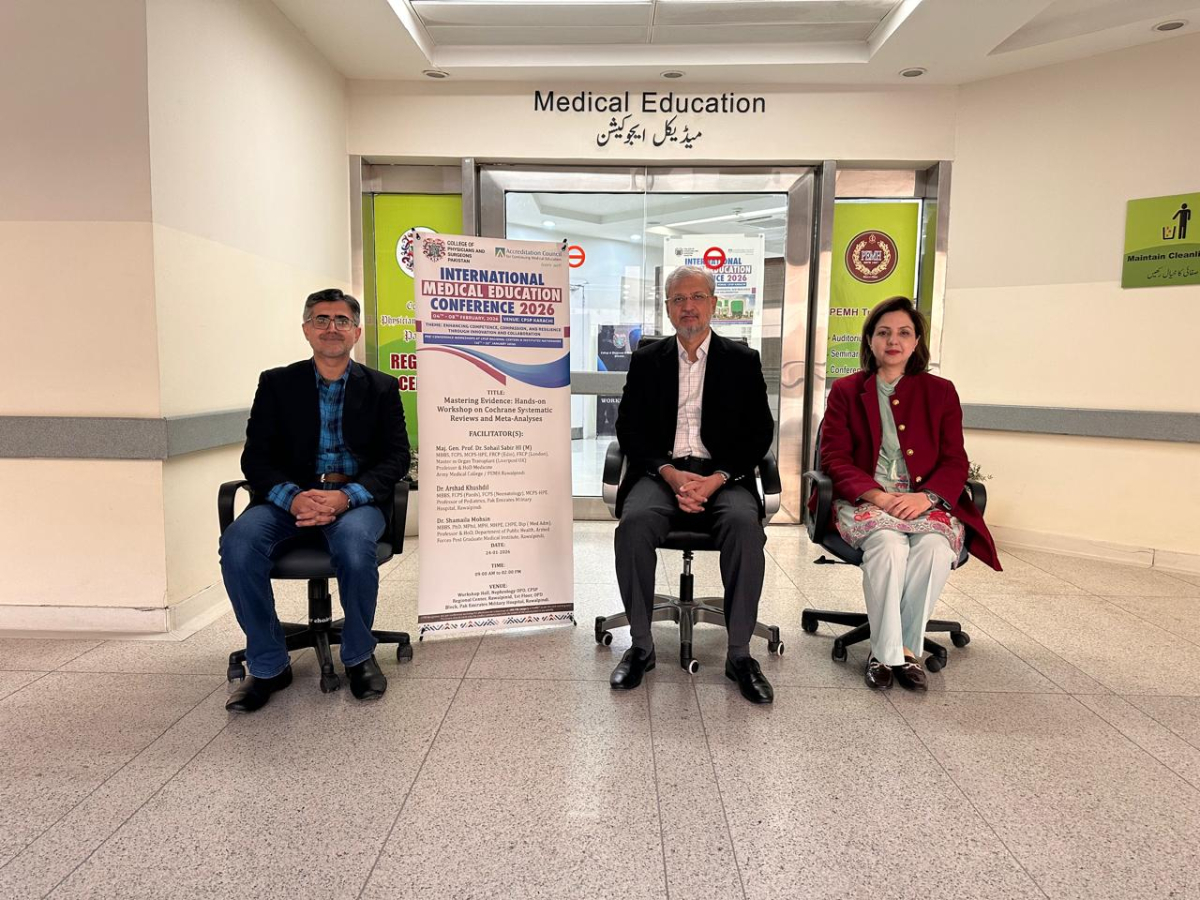
A Global Vision for Local Impact
Prof. Sabir understood that for Pakistan to achieve Universal Health Coverage, its medical decisions could not rely on global data alone. He successfully negotiated the integration of Cochrane Pakistan into the global Cochrane Network, ensuring that Pakistani researchers could participate in high-level systematic reviews while adapting global findings to local clinical realities.
Under his patronage, Cochrane Pakistan was launched with the mission to elevate healthcare standards through rigorous research synthesis. His leadership provided the institutional weight necessary to ensure that EBM was not just an academic exercise but a mandatory component of professional clinical practice.
GRADE Guidelines: Standardising the Quality of Care
Perhaps the most technical and impactful contribution led by Prof. Sabir’s team is the widespread adoption of the GRADE (Grading of Recommendations, Assessment, Development, and Evaluations) methodology.
Why GRADE Matters for Pakistan
GRADE provides a transparent and systematic approach to making health care recommendations. In a resource-constrained environment like Pakistan, where every rupee must be spent effectively, GRADE allows clinicians to differentiate between 'strong' and 'weak' recommendations based on the quality of evidence.
Through a series of national workshops—from Rawalpindi to Quetta—Prof. Sabir and the Master Trainers of Cochrane Pakistan have trained hundreds of House Officers and Residents. This has resulted in:
- Improved critical appraisal skills among postgraduates.
- Reduced variability in clinical practice across different hospitals.
- Enhanced patient safety by prioritizing high-certainty interventions.
Direct Impact: Health Access and Equity
The ultimate beneficiary of the Cochrane movement in Pakistan is the patient. Evidence-Based Medicine has directly contributed to improved access in several ways:
Streamlining the Sehat Sahulat Program (SSP)
By utilizing systematic reviews, health authorities can now better decide which procedures and medicines should be covered under provincial health cards. This ensures that the public exchequer funds treatments that are proven to work, rather than outdated or anecdotal practices.
The Sindh Context and Universal Access
The EBM movement has also highlighted the importance of direct public funding in provinces like Sindh. By analyzing the outcomes of centers like NICVD and SIUT, Cochrane Pakistan provides the evidence needed to advocate for the expansion of specialized care hubs, ensuring that a patient's geographical location does not dictate their survival rate.
The Future is Shining: 2026 and Beyond
The seeds sown by Prof. Dr. Sohail Sabir have grown into a nationwide movement. As we look toward the future, several 'shining' milestones are on the horizon:
Digital Integration and AI
By 2027, the integration of Cochrane evidence into Electronic Health Records (EHR) across CMHs and public hospitals will provide 'at-the-bedside' evidence for clinicians, further reducing diagnostic errors.
A Global Research Hub
Pakistan is on track to becoming a regional hub for Cochrane research in South Asia. With over 38 Master Trainers now leading their own departments, the production of locally relevant systematic reviews is increasing exponentially.
The transition from 'experience' to 'evidence' is the greatest legacy of this era. Under the leadership of Prof. Sabir, Cochrane Pakistan has ensured that the future of Pakistani healthcare is not just hopeful, but scientific, equitable, and undeniably shining.
A Comprehensive Review of the Impact of Prof. Dr. Sohail Sabir and the Rise of Cochrane Pakistan
By Dr Saman Ijaz, Consultant Psychiatrist and Core Member of Cochrane Pakistan